Is the Roku Pro Series 2025 Still Good in 2026? Long-Term Review
I've owned the Roku Pro Series 2025 for about eight months now — I bought it when a friend recommended upgrading our living-room set, and I wanted a Roku with better picture processing and a more premium remote than the budget Roku sticks I've used before. After daily use for movies, sports, and some console gaming, I feel comfortable sharing what held up, what disappointed me, and whether it's still a sensible buy in 2026.
Introduction — why I chose the Roku Pro Series 2025
My household needed a TV that was simple to use for streaming, fast enough for the occasional gaming session, and had a picture that looked noticeably better than the older LED TV it replaced. I was already familiar with Roku's platform and liked its interface and app selection, so upgrading within that ecosystem felt natural. The Pro Series 2025 promised improved local dimming, a better processor for smoother menus and app launches, and a redesigned remote. I wanted to see whether those practical improvements were real in day-to-day use, not just marketing copy.
Unboxing, setup, and first impressions
Out of the box, setup was exactly the kind of painless experience I like: the Roku channel layout, step-by-step Wi‑Fi setup, and automatic account pairing worked with minimal fuss. The physical remote was the first thing that stood out — it felt slightly heavier, had a nice rubberized back for grip, and included dedicated app buttons that mapped to the streaming services we use most. The remote also added a backlit keypad, which I appreciated during late-night viewing.
Initial picture impressions were positive. Straight away, I noticed more contrast compared with my old TV: deeper blacks in dim scenes and brighter highlights in HDR content. Skin tones looked natural to my eye without oversaturation, and the Roku's default color profile felt balanced. I did a small amount of calibration using the built-in picture presets and found a warm color mode plus mild contrast reduction made movies look closest to the theatrical feel I prefer.
Picture quality and HDR performance — real-world observations
Over the months I tested everything from 4K streaming, HDR movies, fast sports, to animated shows. What I found was nuanced: the Pro Series 2025 is clearly a step up over entry-level sets, but it still has limits compared with high-end OLEDs.
- Contrast and local dimming: The local dimming implementation improved black levels significantly in darker rooms. In very dark scenes I still saw some haloing around bright objects, especially with wide blooming highlights, but it was subtle on most content. For movies in a dim living room, the picture looked punchy and satisfying.
- HDR highlights: Bright HDR highlights pop more than my previous TV, and specular highlights on snow, metallic surfaces, and neon signage look lively. It doesn't reach the absolute peak highlights of premium models, but it delivers a convincing HDR experience for streaming and Blu‑ray via my player.
- Color accuracy: Out of the box, the colors were pleasantly natural. After dialing in a few settings, skin tones and landscapes appeared very lifelike. I did notice a touch of oversaturation on some streaming apps' “vibrant” presets, so I stuck with the Cinema/Natural modes most of the time.
- Motion handling: Motion interpolation is present and adjustable. I turned it off for movies to avoid the “soap opera effect,” but enabled a light motion smoothing for sports and live TV. For fast camera pans it kept things smooth without introducing obvious artifacts.
What I appreciated
I appreciated that the Roku Pro Series 2025 made a clear difference where it matters: contrast, HDR pop, and overall fluidity without fiddly settings. Watching night-time scenes in crime dramas or space movies looked substantially better than on my previous set. The TV also handled a wide range of content sources (streaming apps, HDR Blu‑ray player, cable box) without odd color shifts between inputs.
What bothered me
One thing that bothered me was bloom around very small bright objects in otherwise dark scenes. On a few sci‑fi shows I noticed slight halos that drew my eye. Another disappointment was the black frame insertion options: they're limited and not as customizable as some competitor TVs, so hardcore motion‑enthusiasts might be frustrated. Finally, while HDR is good for streamed content, the brightest HDR highlights still looked a notch below the very best panels I’ve seen in stores.
Smart features and Roku OS — daily use experience
Roku's software remains the main reason I keep choosing their TVs. The interface is clean, app selection vast, and updates come through fairly regularly. After several months, I noticed the interface stayed snappy even as I installed more apps and channels.
- App support: All the streaming apps I use — Netflix, Disney+, Prime Video, Apple TV, Max, and more — ran smoothly. App launch times were shorter than on my old TV, and app switching felt responsive.
- Voice search and remote: Voice search works well for basic queries like “play The Bear” or “show science documentaries,” and the remote's voice button is easy to reach. The remote's microphone is only active when you press the button, which I liked for privacy reasons.
- Home screen and ads: The home screen shows promoted content and suggestions. It didn’t feel overwhelming, but if you prefer a completely clean home page, you should know these recommendations are part of Roku's experience.
- Software updates: I received two firmware updates in the time I've owned the TV. One improved HDMI handshake stability with my soundbar, and another fixed a fading issue in an early build. Those updates illustrate that Roku supports these sets post-launch, which I appreciated.
Gaming performance — is it gamer-friendly?
I play both on a PlayStation and a Switch, so gaming performance was a key concern. Here's what I found after a few months of casual and competitive play.
Looking for the best TVs & Home Theater deals on Amazon?
See Deals →- Input lag: Input lag was low enough that I never felt handicapped in platformers or most shooters. For casual and most competitive play it’s fine — I didn't notice any major delay compared to other TVs in the same price range.
- Console compatibility: The TV worked well with HDR gaming on consoles, and it passed through HDR metadata without obvious issues. That said, if you’re chasing 4K at 120Hz for next‑gen titles, the Pro Series 2025 isn't targeted at pushing those extreme refresh rates; look at higher‑end models with full HDMI 2.1 feature sets if that's a must.
- Variable Refresh Rate (VRR): VRR support was present, but implementation felt more conservative than on some gaming‑focused TVs. For the majority of titles, though, tearing was not an issue.
Sound quality and connectivity
Integrated speakers on most modern flat panels are always a compromise. The Roku Pro Series 2025's built-in sound was clear and serviceable for dialog-heavy content and casual viewing. Bass is thin if you like cinematic rumble, so I paired the TV with a compact soundbar mid‑way through my ownership.
Connectivity was straightforward: a set of HDMI inputs (one configured for enhanced gaming features), optical out, and a couple of USB ports. The TV also supported ARC/eARC to send high-quality audio to my soundbar. I did have one intermittent handshake issue with older AVR hardware that was resolved through a firmware update Roku rolled out — a reminder that ecosystem quirks happen, but are often fixable.
Build quality, design, and the remote
The Pro Series 2025 has a slender bezel and a solid-feeling stand. The build feels a step up from cheap sets: no flexing around the chassis and a matte screen finish that cuts reflections well. The remote deserves a call-out — it's the best Roku remote I've used, with an improved tactile d-pad, backlighting, and a headphone jack for private listening (this was useful during late-night watch sessions when others were asleep).
Long-term reliability and updates
After months of daily use, the TV has been stable. The occasional software hiccup was handled by OTA updates within a few weeks. I appreciate that Roku continues to release patches for stability and feature tweaks — that gives me confidence that the TV won't become obsolete quickly on the software side.
Pros & Cons
Pros
- Great Roku OS experience — fast, simple, and full-featured.
- Noticeably improved contrast and HDR highlights over entry-level TVs.
- Solid build quality and a premium-feeling remote with backlight and private-listening jack.
- Regular software updates that fixed early issues I encountered.
- Good all-around performance for streaming, movies, and casual gaming.
Cons
- Still shows haloing/blooming on small bright objects in very dark scenes.
- Not aimed at hardcore gamers seeking 4K120/fully unlocked HDMI 2.1 features.
- Built-in speakers are mediocre for blockbuster movie impact — external sound needed for best experience.
- Roku home screen promotions are present and may bother users who want a completely ad-free UI.
Comparison: Roku Pro Series 2025 vs similar TVs
| Feature | Roku Pro Series 2025 | Roku Pro Series 2024 | TCL 6-Series (2024) |
|---|---|---|---|
| Smart Platform | Roku OS — snappy, updated, many channels | Roku OS — solid but slightly slower app launches | Google TV/Fire — depends on model; comparable app selection |
| Picture / HDR | Improved local dimming, strong HDR for mid-range | Good HDR but shallower contrast than 2025 | Strong contrast and color; often edge in peak brightness |
| Gaming | Low lag, VRR present, not full 4K120 focus | Similar but slightly higher lag | Often better for gamers (more HDMI 2.1 features) |
| Audio | Serviceable speakers, best with soundbar | Serviceable speakers | Varies; some models offer better built-in audio |
| Value | Great balance of features and price for general users | Better value if discounts available | Competitive — sometimes better value for bright-room users |
Who should buy the Roku Pro Series 2025?
In my experience, this TV is a great fit for people who prioritize a clean, reliable streaming experience and want a noticeable step up from basic LED sets without spending on flagship OLED prices. It's especially suitable if:
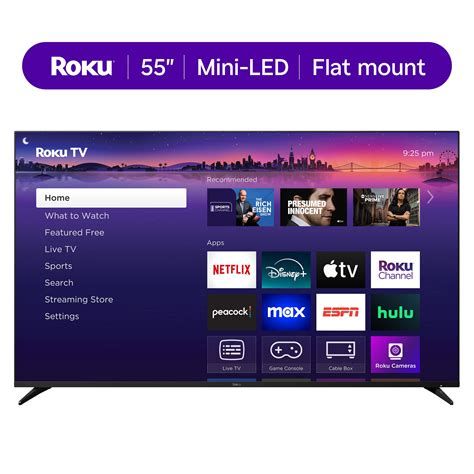
- You want a simple smart platform with wide app support and minimal fuss.
- You watch a mix of HDR movies and sports, and you want better contrast than budget TVs.
- You game casually or play competitive titles where low lag matters, but you don't require full 4K120/next-level HDMI 2.1 features.
- You care about a quality remote and straightforward setup.
Buying guide — tips from my months of use
Here are practical pointers I collected while living with the TV.
Choose the right size for your room
I settled on a 55" model and found it comfortable for a typical living room seating distance (about 8–9 feet). If you sit closer, consider a 50" or 48", and for larger spaces, 65" gives more immersive movie nights. Remember that picture quality scales with size and seating distance — bigger doesn't always mean better if you're too close.
Calibrate or use cinema mode
Out of the box, the picture is pleasant, but running through the TV's Cinema/Natural preset and making small adjustments (reduce contrast by a few points, set color temperature to warm) noticeably improved skin tones and shadow detail. If you don't want to calibrate professionally, these small tweaks make a big difference.
Looking for the best TVs & Home Theater deals on Amazon?
Shop Amazon →Pair a soundbar early
If you like movie soundtracks or game audio, plan a budget for a compact soundbar. The TV's speakers are clear for dialogue but lack low-frequency impact. I paired a bookshelf soundbar with a sub and the improvement was night and day for films.
Check firmware notes and update
Before heavy use, check for updates during setup. I installed the first firmware update within weeks that improved HDMI compatibility. Keeping the TV updated avoids quirky behavior with new consoles or AV receivers.
Consider your gaming needs
If you're a competitive gamer chasing every frame and want 4K at 120Hz, look at gaming-focused models with guaranteed HDMI 2.1 support. The Roku Pro Series 2025 covers most players well, but it's not a top-tier gaming display.
Final thoughts and conclusion
After eight months with the Roku Pro Series 2025, my overall impression is positive: it's a thoughtfully improved mid-range TV that makes streaming enjoyable, delivers punchy HDR for everyday viewing, and keeps the smart-TV experience simple and stable. The remote and software were highlights in my daily routine, and software updates showed that Roku supports the product after purchase.
That said, I wouldn't call it perfect. Bloom around tiny bright elements and the lack of full-on HDMI 2.1 gaming features were the two things that annoyed me at times. If your top priority is ultimate peak brightness, OLED-level contrast, or 4K120 competitive gaming, you should look at higher-end options. For most viewers, however — families, streaming-first households, and casual gamers — the Roku Pro Series 2025 remains a very solid, practical choice in 2026.
In my experience, it's the kind of TV that gets out of the way: it lets you find and watch content easily, looks great for everyday movies and shows, and is reliable enough that I haven't regretted the purchase. If you want a balanced, fuss-free upgrade with a really good Roku experience, this set is still worth considering.